
Proving That Piles Carry What The Design Assumed
A pile is the only structural element built entirely out of sight. Load and integrity testing closes that blind spot — confirming, before the superstructure rises, that each shaft is continuous, sound, and capable of its design load.
-
We Test Our Piles And Other Contractors' Piles
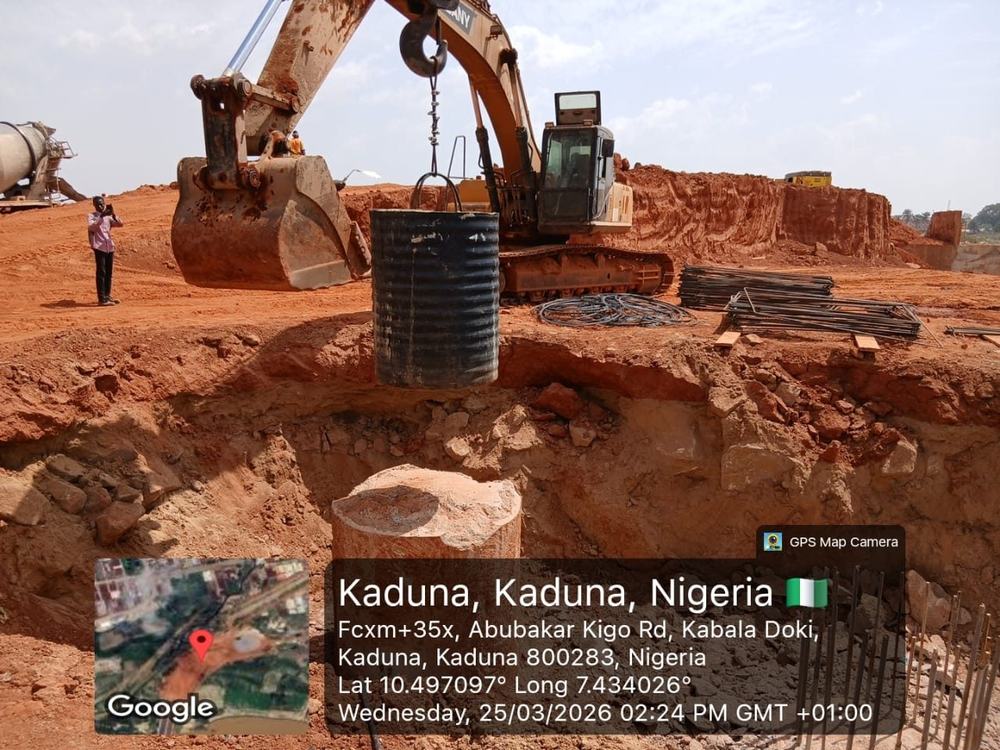
Cigeotech carries out static load testing and low-strain integrity testing on piles we have installed and on piles constructed by others, and reports findings without regard to who installed them. Where a pile is found defective, our engineers advise on remediation.
Foundation Verification
Static Load Testing & Low-Strain Integrity Testing
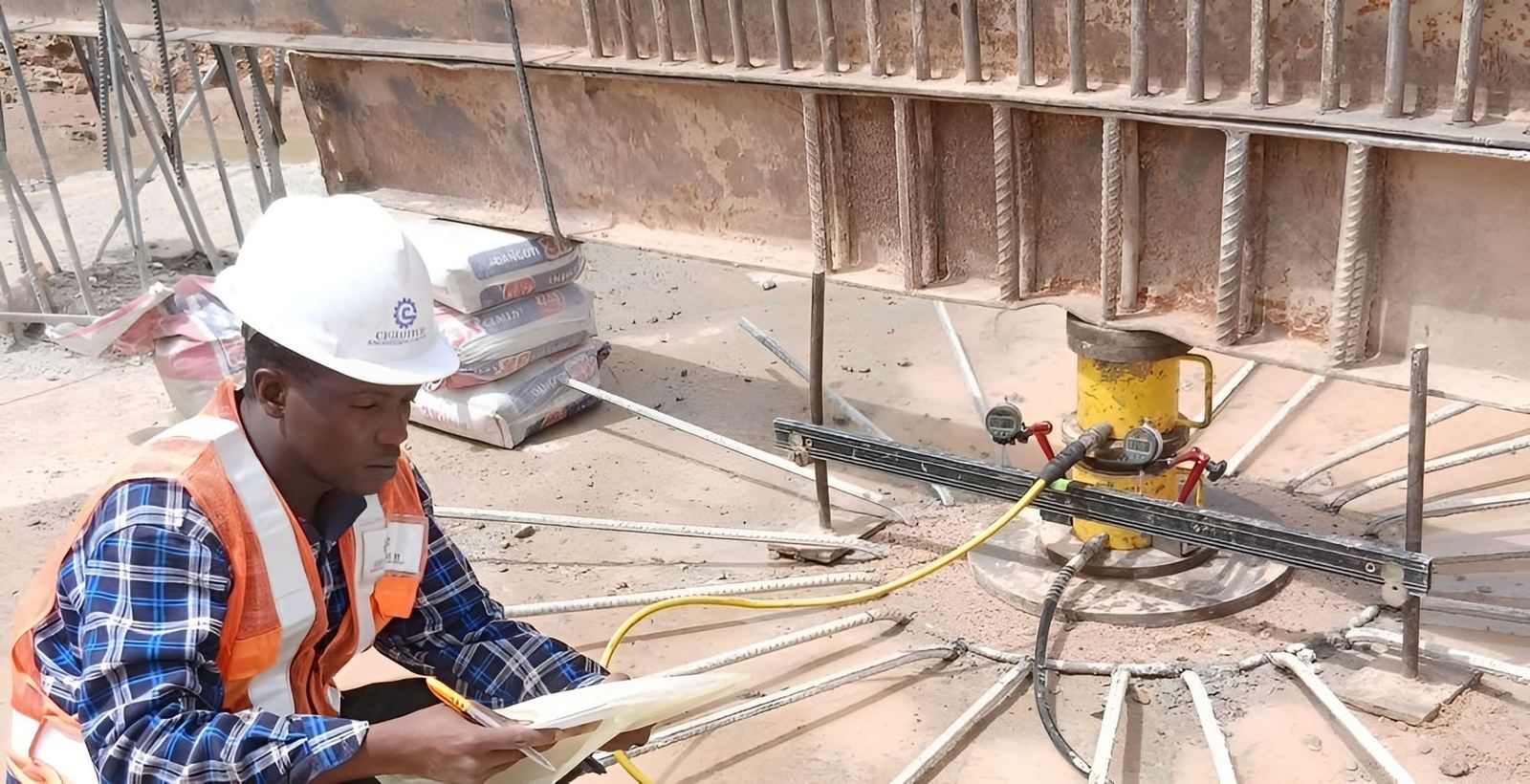
Reaction is provided by kentledge stacks or a tension pile arrangement, with hydraulic jacking against a calibrated load cell. Settlement is measured by dial gauges on an independent reference beam, isolated from the loading system.
Static Load Testing
Maintained Load Tests with settlement recorded at each increment, proof loading to 1.5 times working load, ultimate testing to 2 times working load or failure, plus tension and lateral load testing.
Low-Strain Integrity Testing
A light hammer blow generates a compression wave down the shaft; the reflected wave reveals shaft length and identifies necking, bulging, inclusions, voids or premature toe reflections.
Certified Test Reports
Full load–settlement curves, time–settlement plots per increment, jack and load cell calibration certificates, and an explicit statement of compliance against acceptance criteria.
Tests We Carry Out
- Static Maintained Load Test (MLT)
- Proof load testing to specified working load
- Ultimate load testing on preliminary piles
- Tension (uplift) and lateral load testing
- Low-strain pile integrity testing
Typical Coverage
- Static load testing — 1% to 2% of piles, or as specified
- Integrity testing — up to 100% of piles
- Fast enough to cover many piles per day
- Shaft continuity, length and defect classification
- Remediation advice where defects are found